
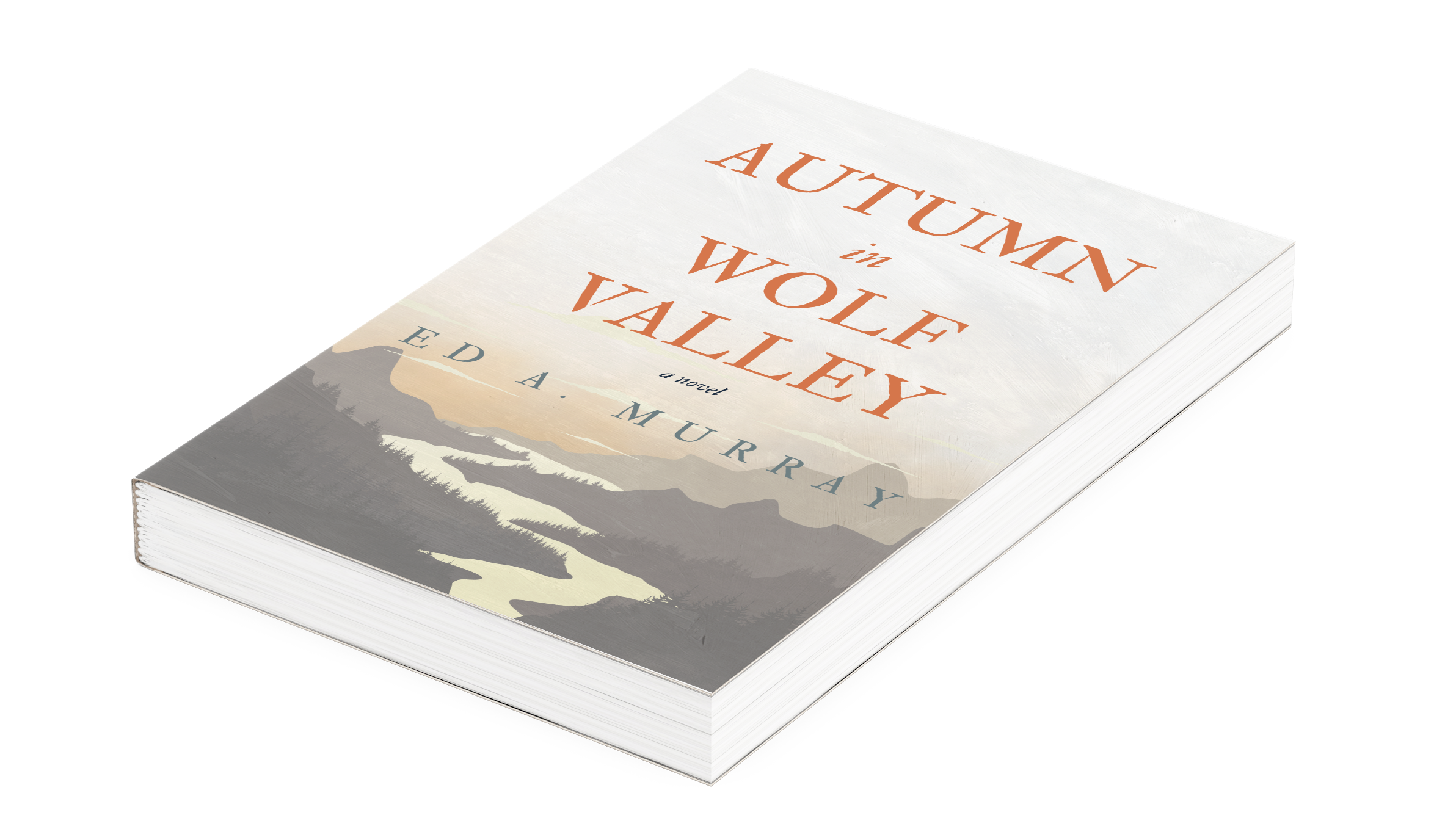
When I finally completed the manuscript for my new novel Autumn in Wolf Valley, I knew I had to get it into the hands of a few trusted friends. I needed honest feedback. By that point, I had read the book several times from start to finish. My critical eye was losing its sharpeness.
I valued every single piece of feedback I received, but there was one phrase in particular that stood out. My friend Kevin Hall, who operates the site PoorChoices.org (and will hopefully one day be publishing a book of his own — no pressure, Kevin!), told me: “This book felt like a love letter to the classic American writers.”
Shockingly, that had not dawned on me until that moment. I have always had an affinity for classic American literature and I was concious to include their references throughout my new novel, but I hadn’t viewed it through that lens before. I was too busy narrowing my focus on the character development and other plot structures that this obvious sub-theme never stood out to me. It was one of those things, in the several more passes I made through the book since receiving this feedback, that adhered to the adage: “Once you see it, you can’t unsee it.”
If you read Autumn in Wolf Valley — and I hope that you give it a chance — you will notice references throughout to Ernest Hemingway, John Steinbeck, William Faulkner, F. Scott Fitzgerald, Thomas Wolfe, and Virginia Woolf. Much like Owen Wilson’s character in Midnight in Paris, which I recommend watching if you haven’t seen it, I succumb to golden age thinking as it relates to early twentieth century American authors.
However, I hope its not without justification.
Ernest Hemingway
Anyone who knows anything about my writing life knows my love for Hemingway. I have ranked his books, watched his Ken Burns documentary multiple times, wrote about his connection to northern Michigan, and named him one of the top five American writers of the twentieth century.
I never read a single Hemingway book in school. Not in high school and not at the University of Michigan. I knew of him (obviously) but it wasn’t until I was out of college and learned about his childhood summers in northern Michigan that I was first drawn to him. I bought the Nick Adams Stories. Seemed like a good place to start. From there I moved on to his novels. His writing is so unique. Perhaps what I love most about it, however, is its authenticity. He never held back. That’s what I tried to emulate with Autumn in Wolf Valley.
John Steinbeck
For as highly as I respect Hemingway, I have long considered John Steinbeck to be the greatest American writer of his time. While most of the famous writers of that era used their real life to inspire their fiction, Steinbeck had a unique way of speaking for the everyman. That, to me, made his books just a little more timeless. This isn’t even to mention that I simply believe that his prose was more descriptive and beautiful — without being overly poetic — than any of his contemporaries.
I would be a fool to compare Autumn in Wolf Valley to classics like Of Mice and Men, East of Eden or The Grapes of Wrath, but I can at least say that I had those books in mind throughout my writing process. If you aren’t inspired by the best writers in American history, who would inspire you?
F. Scott Fitzgerald
I make multiple references to F. Scott Fitzgerald and his work in Autumn in Wolf Valley, and if you pay close attention, you will notice a short passage where I compare the socioeconomic dynamic of northern Michigan to The Great Gatsby. While Steinbeck may have spoken for the everyman of his generation, Fitzgerald cast a wider net and spoke more broadly for the generation as a whole. His writing captured the essence of the age.
Fitzgerald, like the rest of these American writing icons, died far too young. He passed in his mid-forties, never witnessing even close to the pinnacle of his fame. In fact, none of these early twentieth century American authors reached the current retirement age of 67. Not Hemingway (61), not Steinbeck (66), not Faulkner (64), not Wolfe (37), not Woolf (59) and not Fitzgerald (44).
Virginia Woolf
I was introduced to Virginia Woolf’s writing in college, but I did not pay her the respect she deserved until I heard her mentioned as one of Philipp Meyer’s favorite authors. Meyer, of course, is one of my favorite authors, so I did not hesitate to pick up her books after that.
Thomas Wolfe
My wife has family in rural Tennessee, so it was no more than a day trip to Asheville, North Carolina, to visit The Biltmore and see the town where Thomas Wolfe originated. We made that trek for the first time the year before we were married. Since then, I have watched his biopic several times and have learned to revere his writing.
William Faulkner
Of all these writers and their works, I have the least connection with Faulkner. Truthfully, his writing style, while beautiful, simply does not resonate with me the same way the others’ do. But given his place in the twentieth century American literary canon, I always include him when discussing these giants.
The fact that all of these writers were contemporaries astounds me. What a time to be alive. Golden age thinking? Probably. But that doesn’t detract from the lasting impact they have had on authors a century later.
Autumn in Wolf Valley is available now!
 ED A. MURRAY